
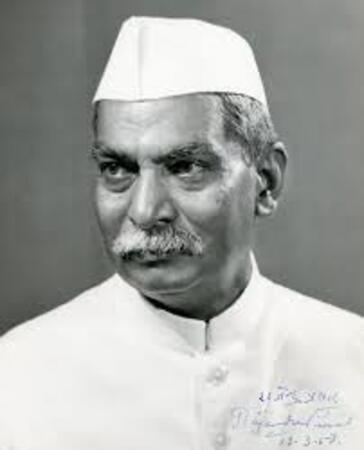
Dr. Rajendra Prasad
Dr. Rajendra Prasad (3 December 1884-28 February 1963) was an Indian freedom fighter, lawyer, and political leader who became the first President of India. He served from 26 January 1950 to 13 May 1962 and earlier chaired the Constituent Assembly that drafted India’s Constitution.
- Full name: Dr. Rajendra Prasad (Encyclopedia Britannica)
- Common name: Rajendra Prasad; Rajen Babu (The Nehru Archive)
- Category (Domain): Politics & Government
- Country: India
- Role/Office (primary): 1st President of India (President of India)
- Current status: Deceased (Encyclopedia Britannica)
- Party/Alliance: Indian National Congress (INC) (Encyclopedia Britannica)
- Constituency/Region: Not applicable (national office); political base closely associated with Bihar (The Nehru Archive)
- Date of birth: 3 December 1884 (President of India)
- Place of birth: Ziradei (Siwan area), Bihar region (then British India) (President of India)
- Date of death: 28 February 1963 (Encyclopedia Britannica)
- Place of death: Patna, Bihar (Encyclopedia Britannica)
- Education: University of Calcutta (noted for academic distinction); M.A. in Economics (1907); Master of Law (1915) (Encyclopedia Britannica)
- Profession/background before politics: Lawyer; also described as a journalist in multiple references (Encyclopedia Britannica)
Overview
Dr. Rajendra Prasad is best known for serving as the first President of India after the Constitution came into effect in January 1950. Before that, he was elected President of the Constituent Assembly on 11 December 1946, guiding its proceedings during the constitution-making period. He also held leadership roles in the Indian National Congress, including serving as its President in 1934, 1939, and 1947.
Early life and education
Rajendra Prasad was born on 3 December 1884 in Ziradei in the Siwan area of Bihar (then part of British India). He studied at the University of Calcutta and is noted in standard references for academic distinction, completing an M.A. in Economics in 1907 and a Master of Law in 1915.
Political career and key roles
Key positions held
- President of India: 26 January 1950 - 13 May 1962
- Provisional/Interim President of India: elected 24 January 1950; oath 26 January 1950; later continued through formal elections held under the Constitution (re-elected in 1952 and 1957)
- President, Constituent Assembly of India: elected 11 December 1946; served through the constitution-making period (final sessions concluded by January 1950)
- Minister for Food & Agriculture (Interim Government): appointed 2 September 1946 (end date not publicly confirmed in the provided data)
- President, Indian National Congress: 1934; 1939; 1947
Major elections/selection milestones
- 24 January 1950: elected provisional President (selection by the Constituent Assembly)
- 1952: elected President after the first general elections
- 1957: re-elected for a second term
Public perception
Strengths commonly cited
Biographical and parliamentary sources commonly describe him as principled, restrained in public conduct, and committed to constitutional procedure. He is also credited with impartiality in major deliberative roles, especially during the Constituent Assembly period.controversies
- Hindu Code Bill debate (early 1950s): Parliamentary biographical material notes documented exchanges where he raised constitutional and political concerns, and legal opinions were sought. The episode is often discussed as part of early debates on the President’s role in a parliamentary system.
- Role boundaries in the early Republic: Some accounts describe differences in interpretation about how the President should act in relation to the elected government during the early years after 1950.
Profession before politics
Before holding top constitutional offices, he worked as a lawyer. Reputable biographical accounts also describe him as a journalist in addition to his legal background.
Major initiatives and decisions
- 1946-1950: Presided over Constituent Assembly proceedings during the framing and adoption of the Constitution (including key closing remarks around adoption in November 1949).
- September 1946 (Interim Government): As Food & Agriculture portfolio holder, described in parliamentary biographical material as focusing on steps linked to food self-sufficiency and reducing imports.
- 1950-1962: As President, took part in shaping early constitutional practice and working conventions between the President and the Prime Minister, as discussed in parliamentary/biographical accounts.
Public perception and notable debates
Strengths commonly cited
Biographical and parliamentary sources commonly describe him as principled, restrained in public conduct, and committed to constitutional procedure. He is also credited with impartiality in major deliberative roles, especially during the Constituent Assembly period.controversies
- Hindu Code Bill debate (early 1950s): Parliamentary biographical material notes documented exchanges where he raised constitutional and political concerns, and legal opinions were sought. The episode is often discussed as part of early debates on the President’s role in a parliamentary system.
- Role boundaries in the early Republic: Some accounts describe differences in interpretation about how the President should act in relation to the elected government during the early years after 1950.
Legal cases
No verified post-independence criminal cases are documented in the provided standard references. He was jailed multiple times by the colonial government during the freedom struggle, which is generally treated in historical context rather than as modern criminal proceedings.Digital and Media
- Official website: Not applicable (historical figure)
- Official social profiles: Not applicable
- Official government biography page: Available via the President of India website
Table of Content
- Early life and education
- Scientific and engineering career
- ISRO and SLV-III (1970s-1980)
- Defence programme leadership (1990s)
- Public service roles before the presidency
- President of India
- Elections and appointments
- Major initiatives and notable milestones
- Publications
- Awards and honours
- Public perception and notable debates
- Commonly cited strengths:
- Criticisms/controversies (verifiable, with context):
- Legal cases:
- Digital and Media
Search Post
FAQs
Who was Dr. Rajendra Prasad?
He was the first President of India and a senior leader in India’s freedom movement. He served as President from 26 January 1950 to 13 May 1962 and earlier led the Constituent Assembly that drafted India’s Constitution.
When was Dr. Rajendra Prasad born?
He was born on 3 December 1884. His birthplace was Ziradei (Siwan area) in Bihar, which was part of British India at the time.
When did Dr. Rajendra Prasad die?
He died on 28 February 1963. Standard references list Patna, Bihar as his place of death.
What was Rajendra Prasad’s main role in Indian history?
He is best known as the first President of India. He also served as President of the Constituent Assembly from 11 December 1946, guiding proceedings during constitution-making.
How long was Rajendra Prasad President of India?
He served from 26 January 1950 to 13 May 1962. He was re-elected after the first general elections (1952) and again in 1957.
What was Rajendra Prasad’s political party?
He was associated with the Indian National Congress (INC). He also served as Congress President in 1934, 1939, and 1947.
What did Rajendra Prasad study?
He studied at the University of Calcutta. Biographical references list an M.A. in Economics (1907) and a Master of Law (1915).
Did Rajendra Prasad write any books?
Yes. Commonly listed works include India Divided (1946) and Atmakatha (1946), along with books connected to the freedom movement and public life.