
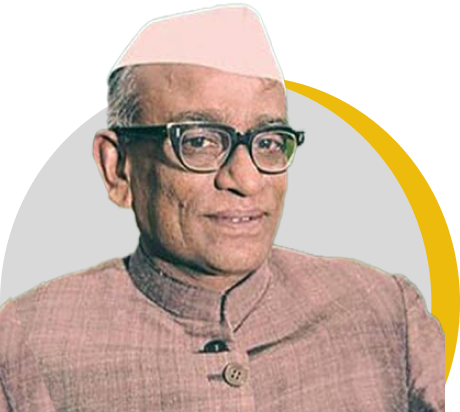
Shri Neelam Sanjiva Reddy
Shri Neelam Sanjiva Reddy (19 May 1913 - 1 June 1996) was an Indian statesman who served as the 6th President of India from 25 July 1977 to 25 July 1982. He also served twice as Speaker of the Lok Sabha and held senior roles in Andhra Pradesh and Union politics. In 1977, he was elected President unopposed.
- Full name: Shri Neelam Sanjiva Reddy (President of India)
- Common name / short name: Neelam Sanjiva Reddy; N. Sanjiva Reddy (Indian National Congress)
- Category (Domain): Politics & Government
- Country: India
- Role/Office (primary): 6th President of India (President of India)
- Current status: Deceased (Wikipedia)
- Party/Alliance: Indian National Congress (INC) (long political career); later associated with Janata Party during the 1977 Lok Sabha election phase (Wikipedia)
- Constituency/Region: Not constituency-based for the presidency; closely associated with Andhra Pradesh politics; served as Speaker of Lok Sabha and represented constituencies in Andhra region across his career (Wikipedia)
- Date of birth: 19 May 1913 (President of India)
- Place of birth: Illur, Andhra Pradesh (as listed on official President of India profile) (President of India)
- Date of death: 1 June 1996 (Wikipedia)
- Education: Early education and college in Madras (Adyar) and Government Arts College, Anantapur (he left studies to join the freedom movement, per INC bio) (Indian National Congress)
- Profession/background before politics: Freedom movement participant; long-time public worker and politician (formal “profession” is not consistently specified in the provided official summaries) (President of India)
Overview
Neelam Sanjiva Reddy had a long political career linked closely to Andhra Pradesh and national politics. He served in leadership roles in Parliament, including two terms as Speaker of the Lok Sabha, and later became President of India. His 1977 presidential election is noted for being unopposed, reflecting broad support at that time.
Early life and education
He was born on 19 May 1913 in Illur (Andhra Pradesh). Biographical notes commonly state that he studied in Madras (Adyar) and at Government Arts College, Anantapur, but left formal education to join the freedom movement.
Profession before politics
In the provided summaries, a single formal profession is not consistently stated. He is generally described as a freedom movement participant and long-time public worker who moved into full-time political activity.
Political career and key roles
Key positions held
- President of India: 25 July 1977 - 25 July 1982 (President of India)
- Speaker of the Lok Sabha: 17 March 1967 - 19 July 1969 (Wikipedia)
- Speaker of the Lok Sabha: 26 March 1977 - 13 July 1977 (Wikipedia)
- Union Minister (Government of India): held cabinet roles during 1964 - 1967 (as summarized in major biographies) (Wikipedia)
- Chief Minister of Andhra Pradesh: served as Chief Minister (dates vary by source; commonly summarized as late 1950s/early 1960s in biographies) (Wikipedia)
Major elections/selection milestones
- 1969 (Presidential election): Contested as the Congress candidate; lost to V. V. Giri (context discussed in INC biography and standard summaries) (Indian National Congress)
- 1977 (Lok Sabha election): Elected to Parliament; became Speaker of the 6th Lok Sabha (Wikipedia)
- 1977 (Presidential election): Elected unopposed as President of India (Wikipedia)
Major initiatives and decisions
- 1977: Elected unopposed to the presidency, a rare outcome in India’s presidential elections and commonly explained as reflecting broad cross-party backing at the time.
- 1967-1969: As Speaker, parliamentary history narratives describe steps supporting the functioning and independence of the Speaker’s office (specific descriptions vary by source).
Books and Publications
Without Fear or Favour: Reminiscences and Reflections of a President (published 1989, as commonly summarized in major biographies).
Awards and honours
- Not publicly confirmed in the provided sources list.
Public perception
Strengths commonly cited
He is often described as an experienced political organiser and administrator with a long public career, including two terms as Speaker and one full presidential term.controversies
- 1969 presidential contest context: The 1969 presidential election is widely discussed as politically significant and linked to internal Congress party developments. In the provided sources, this is presented as historical and political context rather than a legal or personal allegation.
Legal cases
No verified criminal legal cases are highlighted as defining features in the official profile summary and standard secondary summaries referenced in the provided list.Digital and Media
- Official website: None (historical figure; official bio hosted on government portals).
- Official social profiles: None.
Table of Content
- Overview
- Early life and education
- Profession before politics
- Political career and key roles
- Key positions held
- Major elections and selection milestones
- Major initiatives and decisions
- Books and Publications
- Awards and honours
- Public perception
- Strengths commonly cited
- Criticisms and controversies
- Legal cases
- Digital and Media
Search Post
Categories
FAQs
Who was V. V. Giri?
He was an Indian labour leader and statesman who became the 4th President of India. He also served as Acting President in 1969 and earlier as Vice President from 1967 to 1969.
When was V. V. Giri born?
He was born on 10 August 1894. Official sources list his birthplace as Berhampur/Brahmapur in present-day Odisha.
When did V. V. Giri die?
He died on 24 June 1980. Britannica lists his place of death as Madras (now Chennai), Tamil Nadu.
When was V. V. Giri President of India?
He served as President from 24 August 1969 to 24 August 1974. His term is listed on the President of India website.
Why did V. V. Giri became Acting President in 1969?
He served as Acting President after the death of President Dr. Zakir Husain. This acting period is listed in the Vice President of India profile (3 May 1969 – 19 July 1969).
Was V. V. Giri linked to a political party?
Biographies describe him as associated with the Indian National Congress. However, Britannica notes he was elected President as an independent candidate in 1969.
What roles did he hold before becoming President?
He served as Vice President of India and held multiple governor roles. He was Governor of Uttar Pradesh, Kerala, and Mysore State (now Karnataka), and also served as Union Minister of Labour.
What was his connection to labour and trade unions?
He is often described as a key figure in India’s labour movement. Official biographical summaries highlight labour leadership and his work in industrial relations during his ministerial period.
Did V. V. Giri receives the Bharat Ratna?
Yes. He received the Bharat Ratna in 1975. This is stated in the Vice President of India profile.