
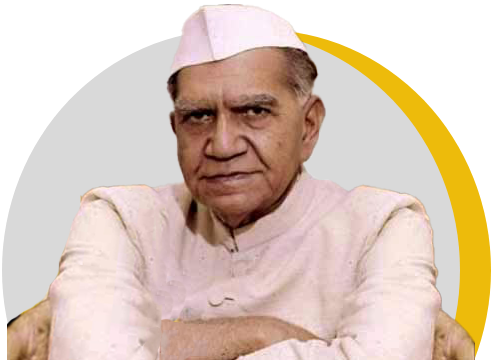
Dr. Fakhruddin Ali Ahmed
Dr. Fakhruddin Ali Ahmed (13 May 1905 – 11 February 1977) was an Indian lawyer and politician who served as the 5th President of India from 24 August 1974 until his death in office. He is best known for issuing the Emergency proclamation on 25 June 1975 on the advice of Prime Minister Indira Gandhi.
- Full name: Dr. Fakhruddin Ali Ahmed (President of India)
- Common name / short name: Fakhruddin Ali Ahmed (President of India)
- Category (Domain): Politics & Government
- Country: India
- Role/Office (primary): 5th President of India (President of India)
- Current status: Deceased (President of India)
- Party/Alliance: Indian National Congress (INC) (Encyclopedia Britannica)
- Constituency/Region:
- Associated with Assam in state politics and later parliamentary roles (Encyclopedia Britannica)
- Elected to Lok Sabha from Barpeta (Assam) (Past Presidents of India)
- Date of birth: 13 May 1905 (President of India)
- Place of birth: Hauz Qazi area, Old Delhi (then British India) (President of India)
- Date of death: 11 February 1977 (President of India)
- Place of death: New Delhi, India (Encyclopedia Britannica)
- Education:
- St. Stephen’s College, Delhi University (Encyclopedia Britannica)
- St Catharine’s College, University of Cambridge (history; graduated 1927) (Encyclopedia Britannica)
- Inner Temple, London (called to the Bar) (Encyclopedia Britannica)
- Profession/background before politics: Lawyer (practised law; also active in the freedom movement) (Encyclopedia Britannica)
Overview
Fakhruddin Ali Ahmed moved from law into public life through the Indian freedom struggle and the Indian National Congress. In later decades, he served in Assam politics and in Parliament, held major Union Cabinet portfolios, and was elected President of India in 1974. His presidency is most closely linked to the 1975 Emergency proclamation.
Early life and education
Ahmed was born on 13 May 1905 in Delhi, with family roots linked to Assam. He studied at St. Stephen’s College (Delhi University), then went to England to study at St Catharine’s College, University of Cambridge (graduated 1927). He was called to the Bar at Inner Temple, London.
Profession before politics
Before holding high office, Ahmed trained and worked as a lawyer. His early political involvement grew alongside participation in national movements, including freedom-struggle actions for which he was arrested during the Quit India period, as described in standard biographies.
Political career and key roles
Key positions held
- President of India: 24 August 1974 – 11 February 1977 (President of India)
- Assam Legislative Assembly (member): roles and periods are listed in timeline summaries (including 1935; and later multi-year terms). (The Nehru Archive)
- Minister of Finance and Revenue, Assam: 1938 - 1939 (Encyclopedia Britannica)
- Advocate General of Assam: 1946 – 1951 (Encyclopedia Britannica)
- Member, Rajya Sabha (Assam): mid-1950s term and a later 1966 term are noted in biographies and timelines. (Encyclopedia Britannica)
- Member, Lok Sabha (Barpeta, Assam): elected in 1967; served across the late 1960s–early 1970s (often summarized as 1967–1974). (Wikipedia)
- Union Minister roles (selected portfolios documented in biographies): Irrigation & Power (1966); Industrial Development/Company Affairs (from March 1967); Food & Agriculture (27 June 1970 – 3 July 1974). (Wikipedia)
Major elections/selection milestones
- 1935: Elected to the Assam legislature (early legislative career). (Encyclopedia Britannica)
- 1967: Elected to Lok Sabha from Barpeta constituency (Assam). (Wikipedia)
- 1974: Elected President of India; sworn in on 24 August 1974. (President of India)
Major initiatives and decisions
- Emergency proclamation (25 June 1975): As President, he issued the Emergency proclamation under Article 352, citing internal disturbance, as recorded in official government material and encyclopedic biographies. (Press Information Bureau)
- Union Cabinet work (early 1970s): As Food and Agriculture Minister, he held responsibility for a major national portfolio during a period of significant policy activity (including land reform committee work noted in some accounts). (Wikipedia)
- Assam finance measures (1938): Encyclopedic biographies highlight his taxation and revenue measures in Assam when he served as finance and revenue minister. (Encyclopedia Britannica)
Books and Publications
Major official biography pages used for this profile do not present him as a primary author of widely catalogued books. Not publicly confirmed (in the sources cited for this page). (President of India)
Awards and honours
No major civilian award is listed on the official President of India profile used here. Not publicly confirmed (in the sources cited for this page). (President of India)
Public perception
Strengths commonly cited
- Often described as an experienced administrator and party leader who served across state, parliamentary, and union roles before becoming President. (Encyclopedia Britannica)
- Remembered for long public service and for holding multiple major cabinet portfolios. (President of India)
controversies
- Emergency (1975–1977): He is closely associated with issuing the 25 June 1975 Emergency proclamation. Critics argue the President should have questioned the advice; others point to constitutional practice where the President acts on the aid and advice of the Council of Ministers in such decisions, and official summaries describe the proclamation as issued on ministerial advice.
Legal cases
- Major official biographies and standard encyclopedic sources referenced here do not highlight any criminal legal cases as defining parts of his public life. (President of India)
Digital and Media
- Official website: None (historical figure; official biography hosted on government portals).
- Official social profiles: None.
Table of Content
- Overview
- Early life and education
- Profession before politics
- Political career and key roles
- Key positions held
- Major elections and selection milestones
- Major initiatives and decisions
- Books and Publications
- Awards and honours
- Public perception
- Strengths commonly cited
- Criticisms and controversies
- Legal cases
- Digital and Media
Search Post
Categories
FAQs
Who was V. V. Giri?
He was an Indian labour leader and statesman who became the 4th President of India. He also served as Acting President in 1969 and earlier as Vice President from 1967 to 1969.
When was V. V. Giri born?
He was born on 10 August 1894. Official sources list his birthplace as Berhampur/Brahmapur in present-day Odisha.
When did V. V. Giri die?
He died on 24 June 1980. Britannica lists his place of death as Madras (now Chennai), Tamil Nadu.
When was V. V. Giri President of India?
He served as President from 24 August 1969 to 24 August 1974. His term is listed on the President of India website.
Why did V. V. Giri became Acting President in 1969?
He served as Acting President after the death of President Dr. Zakir Husain. This acting period is listed in the Vice President of India profile (3 May 1969 – 19 July 1969).
Was V. V. Giri linked to a political party?
Biographies describe him as associated with the Indian National Congress. However, Britannica notes he was elected President as an independent candidate in 1969.
What roles did he hold before becoming President?
He served as Vice President of India and held multiple governor roles. He was Governor of Uttar Pradesh, Kerala, and Mysore State (now Karnataka), and also served as Union Minister of Labour.
What was his connection to labour and trade unions?
He is often described as a key figure in India’s labour movement. Official biographical summaries highlight labour leadership and his work in industrial relations during his ministerial period.
Did V. V. Giri receives the Bharat Ratna?
Yes. He received the Bharat Ratna in 1975. This is stated in the Vice President of India profile.